Tulum
Tulum at a glance
- Where: southern Riviera Maya, about 65 km south of Playa del Carmen and 130 km from Cancun
- Best for: the clifftop Maya ruins, cenotes, Sian Ka'an and a slower beach stay
- Best months: November to April; mornings are best year-round
- Ruins entry (foreign visitors, from 20 July 2026): 100 MXN Parque del Jaguar + 165 MXN archaeological zone and national park = 265 MXN
- Airports: Tulum (TQO), about 35–45 minutes away; Cancun (CUN), about 2 hours
- Getting around: bicycle, taxi, colectivo along the highway, or a rental car
Introduction: two Tulums
When people say "Tulum" they can mean three different things: the Maya city on the cliff, the town (Tulum Pueblo) along Highway 307, and the beach zone – the strip of hotels, beach clubs and restaurants running south along the coast road. Understanding the difference is the first thing I explain to anyone planning a visit, because it decides where you sleep, how you get around and how much you spend.
The town is practical and much cheaper: bus station, supermarkets, taquerías, colectivos. The beach zone is beautiful and expensive, with limited road access and slow traffic in high season. The ruins sit at the northern end, inside the new Parque del Jaguar. Tulum also makes the best base on the coast for the cenotes, for Coba and for the Sian Ka'an Biosphere Reserve.
Why visit Tulum
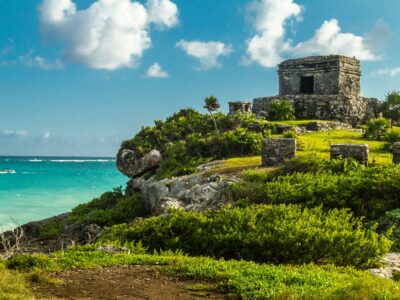
- The only major Maya city on the Caribbean. Tulum was a walled port, and El Castillo standing above the sea is one of the most recognisable views in Mexico. It is small – you can see it properly in about two hours – but the setting is unique.
- Cenotes on the doorstep. Some of the region's best-known cenotes are within 10–30 minutes, along the road to Coba and on Highway 307 north of town (see the best cenotes near Tulum).
- Nature to the south. The Sian Ka'an Biosphere Reserve, a UNESCO World Heritage Site, starts just south of the beach zone, and the Muyil canals are 20 minutes away.
- Coba in a half day. The jungle city of Coba is about 45 minutes inland.
- The beach. On a clear-water day, Tulum's beaches are among the most beautiful on the coast. Plan around sargassum (see below).
Best time to visit
November to April brings drier weather, cooler nights and usually clearer water. Christmas, New Year and Easter are the most expensive and crowded weeks. For the whole region month by month – sargassum, hurricanes, whale sharks and turtle season – see our guide to the best time to visit the Riviera Maya.
May to October is hot and humid with afternoon storms, and it is the main sargassum season. Tulum's beaches are among the first on the coast to be hit, and 2026 was a record year. The ruins, cenotes and Sian Ka'an's lagoons are unaffected, so a summer trip is still very rewarding if you plan it around inland days.
Time of day matters more than the month. The archaeological zone opens at 8:00 am and has almost no shade. Arrive at the Parque del Jaguar gate before 8:15 and you will see the site before the tour groups that arrive from Cancun and Playa from around 10:00.
Visiting between spring and early autumn? Check our sargassum guide for live beach maps and plan-B days.
How to get to Tulum
- Tulum International Airport (TQO) opened in December 2023 and has flights from several Mexican, US and Canadian cities. It is roughly 35–45 km from town; taxis and private transfers commonly cost USD 60–80 to the town and more to the beach zone. A bus service to Tulum Centro also runs from the airport.
- From Cancun airport (CUN) – ADO buses run direct to Tulum (about 2–3 hours; roughly 300–500 MXN, with a limited number of direct departures). Private transfers cost far more but go straight to your hotel. Full comparison: Cancun airport to Tulum – every option. Most international flights still arrive here.
- From Playa del Carmen – ADO (about 100–160 MXN) or colectivo (about 50–100 MXN), 1–1.5 hours – see our colectivo guide.
- Tren Maya – the train stops at Tulum's station next to the Parque del Jaguar. It is useful for Playa del Carmen, Cancun airport and the south (Bacalar) – see the Tren Maya guide – but check departures in advance; they are limited.
Transportation options in Tulum
- Bicycle. The town and the beach zone are flat and there are bike lanes on the main roads. Many hotels lend or rent bikes. Use lights at night.
- Taxis. Not metered and known for high prices, especially to and from the beach zone. Always agree the fare first.
- Colectivos. Vans to Playa del Carmen, Akumal and the cenotes on Highway 307 run from Avenida Tulum in town. Colectivos toward Coba leave from town too.
- Rental car. The easiest way to combine Coba, cenotes and Muyil in one day. Expect slow traffic and paid parking in the beach zone.
- Scooters. Popular, but accidents are common. Wear a helmet and avoid riding at night.
Taxis, Uber (launched in Tulum in October 2026) and fair-price tips: see taxis and ride-hailing.
Visiting the ruins: what changed in 2026
The Tulum archaeological zone now sits inside the Parque del Jaguar, and the main entrance is at the park, next to the Tren Maya station – not the old roadside gate. Set your map to "Parque del Jaguar". Since 20 July 2026, foreign visitors pay 100 pesos for the park plus one combined payment of 165 pesos for the archaeological zone and Tulum National Park. Small electric carts run from the park entrance toward the site for about 20 pesos per person; walking is also fine in the early morning. Action cameras such as GoPros carry an extra fee; phones do not. Bring pesos in cash.
Inside, you cannot climb the structures. Plan about two hours, bring water and a hat, and allow time for the beach below the ruins if access is open.
From the guide's notebook
My honest opinion: the new set-up has made the visit more expensive and, for me, a less enjoyable experience. Visitors are now moved through in a way that can feel like being herded like cattle. Go at opening time, when it's quieter.
The story I always tell guests here is about the lighthouse theory. Tulum sits behind the reef, and it has long been suggested that El Castillo guided canoes to the safe gap in the coral. When the idea was tested by placing light behind the small windows of the Castillo, the beams lined up with the break in the reef – the safe way in from the open sea.
Typical costs (November 2026)
| Ruins + Parque del Jaguar (foreign adult) | 265 MXN, plus ~20 MXN for the cart |
| ADO bus, Cancun airport → Tulum | about 250–380 MXN |
| Colectivo, Tulum → Playa del Carmen | about 50–100 MXN |
| Taxi, town ↔ beach zone | often 150–400 MXN depending on distance |
| Bike rental | about 150–250 MXN per day |
| Popular cenote entry | about 200–550 MXN per person |
| Taco lunch in town | about 100–200 MXN |
| Dinner in the beach zone | often 800–2,000 MXN per person |
Tulum's beach zone is the most expensive place on the Riviera Maya. Staying in town and cycling to the beach can halve a trip's cost.
Tulum is one of the priciest bases on the coast – compare daily budgets in How much a Riviera Maya trip costs.
Why travellers choose Tulum
Travellers choose Tulum for the combination of Maya history, cenotes and nature that no other base on the coast offers so close together. It suits couples, wellness travellers and anyone who wants a slower pace than Playa del Carmen. Families and budget travellers often do better in town or in nearby Akumal, and visit the beach zone for a day.
Common mistakes visitors make
- Arriving at the ruins at midday. It is hot, crowded and shadeless. Go at opening time.
- Navigating to the old ruins entrance. Use the Parque del Jaguar entrance next to the train station.
- Paying unofficial parking or "guides" on the roadside. Use the official parking and buy entry at the official windows.
- Booking a beach-zone hotel without checking transport. Taxis add up quickly. If you will explore, stay in town or have bikes or a car.
- Assuming the beach will be clear in summer. Check sargassum maps and plan inland days.
- Entering cenotes with sunscreen or repellent. Shower first and wear a rash guard; most cenotes enforce this. See our cenote rules and safety checklist.
Local tips
- Combine the ruins with a cenote. Ruins at 8:00, a cenote before 11:00, lunch in town while the tour buses take over.
- Book Sian Ka'an with the right side in mind. Muyil (canals and lagoons, 20 minutes south) and Punta Allen (coast, dolphins, a long rough road) are completely different trips.
- Eat in town. Avenida Tulum and the streets behind it have excellent, reasonably priced food.
- Check beach access points. Public access to beaches inside the Parque del Jaguar has changed several times; ask locally which accesses are open.
- Cash is king. Cenotes, colectivos and many small businesses are cash only.
From the guide's notebook
My favourite cenote for Tulum visitors is Nohoch Nah Chich, north of town, which shows off the huge underground river systems of the region – see the best cenotes near Tulum for more. And the best tacos? A local lady sells them, mostly to guides and other workers, at the main parking area by the Tulum ruins. Look for where the guides are eating.
Safety considerations
Quintana Roo is at Level 2 ("exercise increased caution") in the U.S. State Department's advisory. Most visitors have no problems. The risks that matter in Tulum are mostly practical:
- Roads at night. Cycling and scooter riding on unlit roads is the most common cause of injury. Use lights, a helmet, and taxis after dark.
- Nightlife. Problems are concentrated around the drug trade at parties and clubs. Don't buy drugs, watch your drink, and leave if the atmosphere changes.
- Sea conditions. Currents can be strong; respect flags and avoid swimming alone.
- Cenotes. Wear the life jacket where provided and never enter cave sections without a certified cave guide.
- Heat. Dehydration is a real risk at the ruins – carry water.
- Emergency number: 911.
More detail: Is Tulum safe? and how to escape a rip current.
Nearby attractions
- Coba – jungle Maya city where you can climb the Nohoch Mul pyramid again.
- Sian Ka'an and Muyil – canals, lagoons and mangroves just south of town.
- Cenotes – on the road to Coba and along Highway 307 north. Start with Cenotes 101.
- Akumal – turtles in a protected bay, 25 minutes north.
- Xel-Há – a large inlet park run by Grupo Xcaret, 15 minutes north.
- Bacalar – the lagoon of seven colours, about 2 hours south.
Explore the water: cenote snorkelling, cenote diving and Sian Ka’an tours compared.
Related destinations
- Playa del Carmen travel guide
- Coba travel guide
- Sian Ka'an travel guide
- Akumal travel guide
- Chichen Itza travel guide
Related reading
- Cenotes 101: a guide to the Riviera Maya's sinkholes
- Tour visuals: Maya history images, including historic Tulum illustrations
- Responsible wildlife tourism in the Riviera Maya
Plan the rest of your trip
- Plan your Riviera Maya trip – entry rules, fees, money and seasons
- Cenotes of the Riviera Maya – where to swim and the rules
- Wildlife & Nature – turtles, reefs and responsible encounters
- Staying safe in the Riviera Maya – practical advice and emergency numbers
- All destination guides
Transport guides for your trip
| Languages spoken | Spanish; English |
|---|---|
| Currency used | Mexican Peso (MXN), USD |
| Country name | Mexico |